
The landscape of global athletics is shifting as major governing bodies refine their policies. Recently, the international olympic committee updates have sparked intense global debate regarding the future of competitive fairness.
This significant policy change centers on the IOC new rule 2026, which aims to standardize participation criteria. The goal is to protect the integrity of events reserved for biological females olympics participants.
Many stakeholders are analyzing how these ioc regulations for gender in sports will impact future events. The primary focus remains on maintaining a level playing field for all competitors while addressing complex women’s olympic eligibility standards.
Key Takeaways
- The committee has introduced a strict policy for upcoming games.
- Fairness in competition remains the primary objective for organizers.
- The decision specifically addresses participation in categories for athletes assigned female at birth.
- Global sports authorities are seeking a balance between inclusion and competitive integrity.
- This update marks a major shift in how international events manage gender criteria.
The Official Announcement of the IOC New Rule 2026
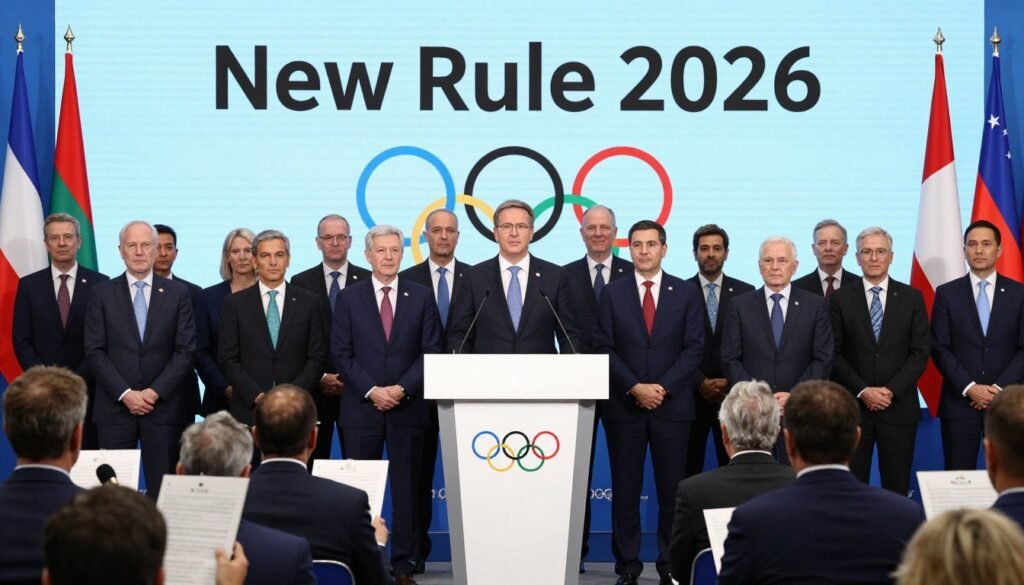
In a significant move, the IOC announced its new rule for the 2026 Olympics, sparking widespread debate among sports enthusiasts and human rights advocates. The decision has far-reaching implications for trans athletes, national Olympic committees, and the broader sports community.
Details of the Policy Shift
The IOC’s new policy introduces stricter eligibility criteria for female athletes, particularly those with differences in sex development (DSD) or trans athletes. The primary goal is to ensure fair competition while promoting inclusivity. The policy shift is based on extensive research and consultation with various stakeholders, including athletes, sports organizations, and human rights groups.
A key aspect of the new rule is the establishment of sport-specific eligibility criteria. This means that each sport will have its own set of rules regarding the participation of trans athletes, taking into account the specific physiological demands and competitive advantages associated with each sport.
Timeline for Enforcement
The IOC has outlined a clear timeline for the implementation of the new rule. The policy will come into effect immediately for the 2026 Olympics, with a phased rollout for subsequent games. National Olympic committees and international sports federations are expected to adapt their eligibility criteria accordingly.
| Event | Timeline | Key Actions |
|---|---|---|
| 2026 Olympics | Immediate Enforcement | Implementation of new eligibility criteria |
| 2027-2028 Sports Season | Phased Rollout | National Olympic committees to adapt policies |
| 2029 and Beyond | Full Implementation | All sports federations to comply with IOC guidelines |
The IOC’s decision reflects a balanced approach, aiming to reconcile the principles of fair competition with the need for inclusivity and respect for athletes’ rights. As the sports community prepares for the 2026 Olympics, understanding these changes will be crucial for athletes, coaches, and sports organizations alike.
Defining Biological Females Olympics Eligibility Criteria
The IOC’s recent decision to ban trans athletes from the 2026 Women’s Olympics has sparked a crucial debate on the eligibility criteria for biological females in the Olympics. This decision has significant implications for the future of women’s sports and the principles of fair competition.
The new rule has raised questions about how biological females are defined in the context of Olympic participation. The IOC’s guidelines have historically been a benchmark for international sports organizations, and this latest ruling is expected to have far-reaching consequences.
Establishing New Participation Standards
The IOC’s introduction of new participation standards aims to clarify the eligibility criteria for female athletes. These standards are part of the IOC guidelines that govern various aspects of Olympic participation, including gender verification sports protocols.
The new standards will likely involve rigorous testing and verification processes to ensure compliance with the regulations. This could include hormone level assessments and other physiological evaluations to determine an athlete’s eligibility under the new rules.
Clarifying the Scope of the Ban
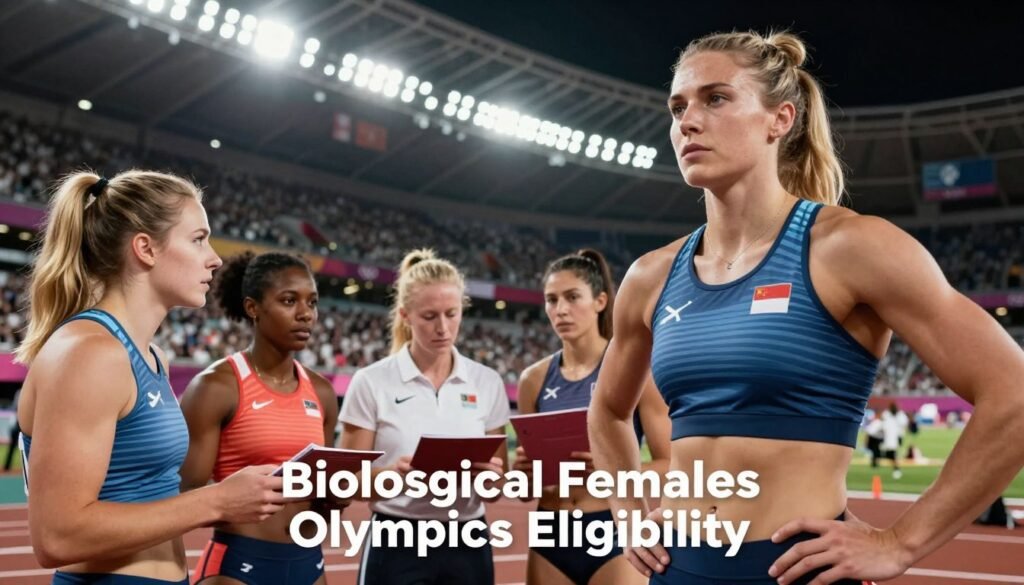
The IOC’s decision to ban trans athletes from the 2026 Women’s Olympics has raised questions about the scope of the ban and its implications for female athletes regulations. The clarification of this scope is essential for understanding the impact on women’s Olympic eligibility.
The ban is expected to affect athletes who have undergone gender reassignment surgery or hormone therapy, among other factors. The IOC will need to provide clear guidelines on what constitutes compliance with the new women’s olympic eligibility criteria.
By establishing clear and comprehensive guidelines, the IOC aims to ensure fair competition and maintain the integrity of women’s sports. The new regulations will be crucial in determining the future of biological females olympics participation.
Historical Context of Gender Identity in Sports
Understanding the historical context of gender identity in sports is crucial to grasping the implications of the IOC’s latest policy update. The issue of gender identity in sports has evolved significantly over the years, with various controversies and policy adjustments shaping the current landscape.
Evolution of IOC Gender Guidelines
The International Olympic Committee (IOC) has been at the forefront of addressing gender identity in sports. The IOC’s gender guidelines have undergone significant changes, reflecting the complexities and challenges associated with ensuring fairness and inclusivity in women’s sports.
In the past, the IOC has relied on sex testing to determine athletes’ eligibility. However, this approach has been widely criticized for its simplicity and failure to account for the complexities of gender identity.
The IOC has since moved towards a more nuanced approach, considering factors such as hormone levels and the impact of hormone therapy on athletic performance.
Previous Controversies and Policy Adjustments
The IOC’s policies on gender identity have not been without controversy. Several high-profile cases have highlighted the challenges of balancing inclusivity with fairness in women’s sports.
One notable example is the case of Castor Semenya, a South African middle-distance runner who has been at the center of a long-standing debate about gender verification in sports.
The IOC’s response to such controversies has been to continually update and refine its policies, aiming to strike a balance between inclusivity and fairness.
- The IOC has faced criticism for its handling of gender identity issues, with some arguing that the organization’s policies are too restrictive.
- Others have expressed concerns that the IOC’s policies do not adequately address the complexities of gender identity.
- The ongoing debate highlights the need for a nuanced and multifaceted approach to addressing gender identity in sports.
Scientific Perspectives on Competitive Advantages in Women’s Sports
Understanding the physiological factors that contribute to athletic performance is essential in the discussion about competitive advantages in women’s sports. The debate surrounding transgender athletes in women’s categories has led to a deeper examination of these factors.
Physiological Factors in Athletic Performance
Athletic performance is influenced by a multitude of physiological factors, including muscle mass, bone density, and cardiovascular capacity. These factors can significantly impact an athlete’s overall performance and competitive edge.
Muscle Mass and Strength: Muscle mass is a critical determinant of strength and power in athletes. Variations in muscle mass can affect performance in sports that require quick bursts of energy or sustained strength over time.
Bone Density: Bone density is another crucial factor, as it influences an athlete’s overall power and resilience. Higher bone density can provide a competitive advantage in sports involving high-impact movements.

Research on Hormone Therapy and Muscle Mass
Hormone therapy is often used by transgender athletes as part of their transition process. Research has been conducted to understand the effects of hormone therapy on muscle mass and athletic performance.
A study published in a leading sports medicine journal found that hormone therapy can lead to significant changes in muscle mass and strength. The study observed that reductions in testosterone levels were associated with decreases in muscle mass and strength in transgender women.
Evaluating Long-term Biological Impacts
Evaluating the long-term biological impacts of hormone therapy is crucial for understanding its effects on athletic performance. Long-term studies are necessary to determine how hormone therapy influences competitive advantages over time.
| Physiological Factor | Effect of Hormone Therapy | Impact on Athletic Performance |
|---|---|---|
| Muscle Mass | Decrease in muscle mass | Reduced strength and power |
| Bone Density | Potential decrease in bone density | Increased risk of fractures and osteoporosis |
| Cardiovascular Capacity | Variable effects | Potential impact on endurance |
The table above summarizes the potential effects of hormone therapy on various physiological factors and their subsequent impact on athletic performance. Understanding these effects is vital for creating fair and inclusive competitive environments.
Global Reactions and Stakeholder Perspectives
The IOC’s new rule for the 2026 Olympics has elicited a wide range of reactions worldwide. The decision to ban trans athletes from the Women’s Olympics has sparked intense debate among various stakeholders.
Voices from Women’s Advocacy Groups
Women’s advocacy groups have been vocal about their support for the IOC’s decision, citing concerns about fair competition and the integrity of women’s sports. “This is a victory for women’s sports,” said Emma Harrison, a spokesperson for the Women’s Sports Advocacy Group. “We have always believed that biological females should compete against each other without the advantage of athletes who have undergone male puberty.”
However, not all women’s groups agree with the IOC’s stance. Some argue that the decision is discriminatory and could have unintended consequences for gender equality in sports.
Responses from Transgender Athlete Organizations
Transgender athlete organizations have strongly criticized the IOC’s decision, calling it “discriminatory” and “a step backward for inclusivity in sports.” According to Jamie Norton, a representative of the Trans Athlete Alliance,
“The IOC’s decision ignores the scientific evidence that hormone therapy can significantly reduce the athletic advantages associated with male puberty. It’s a blow to the principles of inclusivity and respect for all athletes.”
International Sports Federation Statements
International sports federations have also weighed in on the IOC’s new rule. While some have expressed support for the decision, others have called for more nuanced approaches to addressing the complex issues surrounding trans athletes in women’s sports.
- The International Tennis Federation has stated that it will review its own policies in light of the IOC’s decision.
- The World Athletics Federation has expressed concerns about the potential impact on the integrity of women’s competitions.
The diverse reactions reflect the complexity of the issue and the need for ongoing dialogue among stakeholders to find a balance between inclusivity and fair competition.
Implementation of Gender Verification Procedures
The introduction of gender verification procedures by the IOC is a response to ongoing debates about fairness and inclusivity in women’s sports. As the world prepares for the 2026 Olympics, understanding the implications of these procedures is crucial.
The IOC’s new rule aims to balance the need for fair competition with the rights and dignity of athletes. This balance is delicate and requires careful consideration of various factors, including the standardization of testing protocols and ensuring privacy and ethical compliance.
Standardizing Testing Protocols
Standardizing testing protocols is essential for the fair implementation of gender verification procedures. This involves developing and applying consistent methods for assessing athletes’ eligibility according to the new criteria. The IOC must work closely with international sports federations and medical experts to establish these protocols.
The key aspects of standardizing testing protocols include:
- Developing clear guidelines for eligibility testing
- Ensuring consistency across different sports and events
- Training personnel to conduct these tests fairly and accurately
Ensuring Privacy and Ethical Compliance
Ensuring privacy and ethical compliance is another critical aspect of implementing gender verification procedures. The IOC must safeguard athletes’ personal and medical information while conducting necessary verifications.
Key measures to ensure privacy and ethical compliance include:
- Implementing robust data protection policies
- Obtaining informed consent from athletes before conducting tests
- Ensuring that testing procedures are respectful and non-invasive
By standardizing testing protocols and ensuring privacy and ethical compliance, the IOC can implement gender verification procedures that are both fair and respectful of athletes’ rights.
Legal Challenges and Human Rights Considerations
The introduction of the IOC’s new policy has ignited a complex discussion around legal challenges, human rights, and the future of transgender athletes in women’s sports. This multifaceted issue requires a delicate balance between ensuring fair competition and respecting the rights of all athletes.
The new rule, set to be enforced during the 2026 Women’s Olympics, has raised significant concerns among various stakeholders, including legal experts, human rights advocates, and the athletes themselves. As a result, it is anticipated that there will be legal challenges to the IOC’s decision.
Potential for Litigation and Appeals
The potential for litigation arises from the contention that the IOC’s new rule may infringe upon the human rights of transgender athletes. Legal challenges may be mounted on the grounds of discrimination and violation of privacy.
Key areas of potential litigation include:
- Discrimination against transgender athletes
- Violation of human rights and privacy
- Dispute over the scientific basis of the IOC’s new rule
It is likely that affected athletes and advocacy groups will appeal to various international and national courts, as well as human rights bodies, to challenge the IOC’s decision.
Balancing Inclusion with Fair Competition
One of the core challenges facing the IOC is balancing the need for fair competition with the principle of inclusion. The IOC must navigate these complex issues to ensure that its decision is fair, equitable, and compliant with human rights standards.
A comparative analysis of different approaches to this issue is presented in the table below:
| Approach | Fair Competition | Inclusion |
|---|---|---|
| Strict Eligibility Criteria | High | Low |
| Inclusive Eligibility Criteria | Medium | High |
| Case-by-Case Evaluation | Variable | Variable |
The IOC’s decision will have significant implications for the future of women’s sports and the participation of transgender athletes. It is crucial that the IOC strikes a balance that respects the rights of all athletes while maintaining the integrity of competition.
Impact on Future Olympic Games Qualification
The IOC’s recent decision to ban trans athletes from competing in women’s events at the 2026 Olympics is set to have far-reaching consequences on the qualification process for future Olympic Games. This policy shift will require national Olympic committees and athletes to adapt to new regulations.
The adjustments for national Olympic committees will be significant. They will need to reassess their selection criteria and ensure compliance with the IOC’s new eligibility standards. This may involve revising their policies on athlete eligibility and implementing new verification processes.
Adjustments for National Olympic Committees
National Olympic committees will need to work closely with international sports federations to understand the implications of the new rule. They will have to adjust their qualification processes to align with the IOC’s guidelines, ensuring that their athletes meet the new eligibility criteria.
Key Considerations for National Olympic Committees:
- Reviewing and revising athlete selection policies
- Implementing new eligibility verification processes
- Collaborating with international sports federations
Changes to Training and Selection Processes
The new regulations will also impact the training and selection processes for athletes. Coaches and trainers will need to be aware of the changed eligibility criteria and adjust their training programs accordingly.
Potential Changes to Training Programs:
| Area of Focus | Previous Approach | New Approach |
|---|---|---|
| Athlete Eligibility | Less stringent eligibility criteria | Stricter eligibility criteria based on IOC guidelines |
| Training Programs | General training programs | Tailored training programs to meet new eligibility standards |
| Selection Processes | Selection based on previous performance | Selection based on new eligibility criteria and performance |
By understanding the implications of the IOC’s new rule and making necessary adjustments, national Olympic committees and athletes can navigate the changed landscape of Olympic qualification.
Conclusion
The IOC’s decision to implement the ioc new rule 2026 has significant implications for women’s olympic eligibility. The new policy aims to ensure fairness in women’s sports by establishing clear guidelines for biological females olympics participation.
As the sports community watches the implementation of this rule, it is clear that the IOC is striving to balance inclusivity with fair competition. The outcome of this policy shift will be closely monitored, and its impact on future Olympic Games will be substantial.
The IOC’s efforts to clarify women’s olympic eligibility criteria will likely have far-reaching consequences, shaping the future of women’s sports and the Olympic Games.