
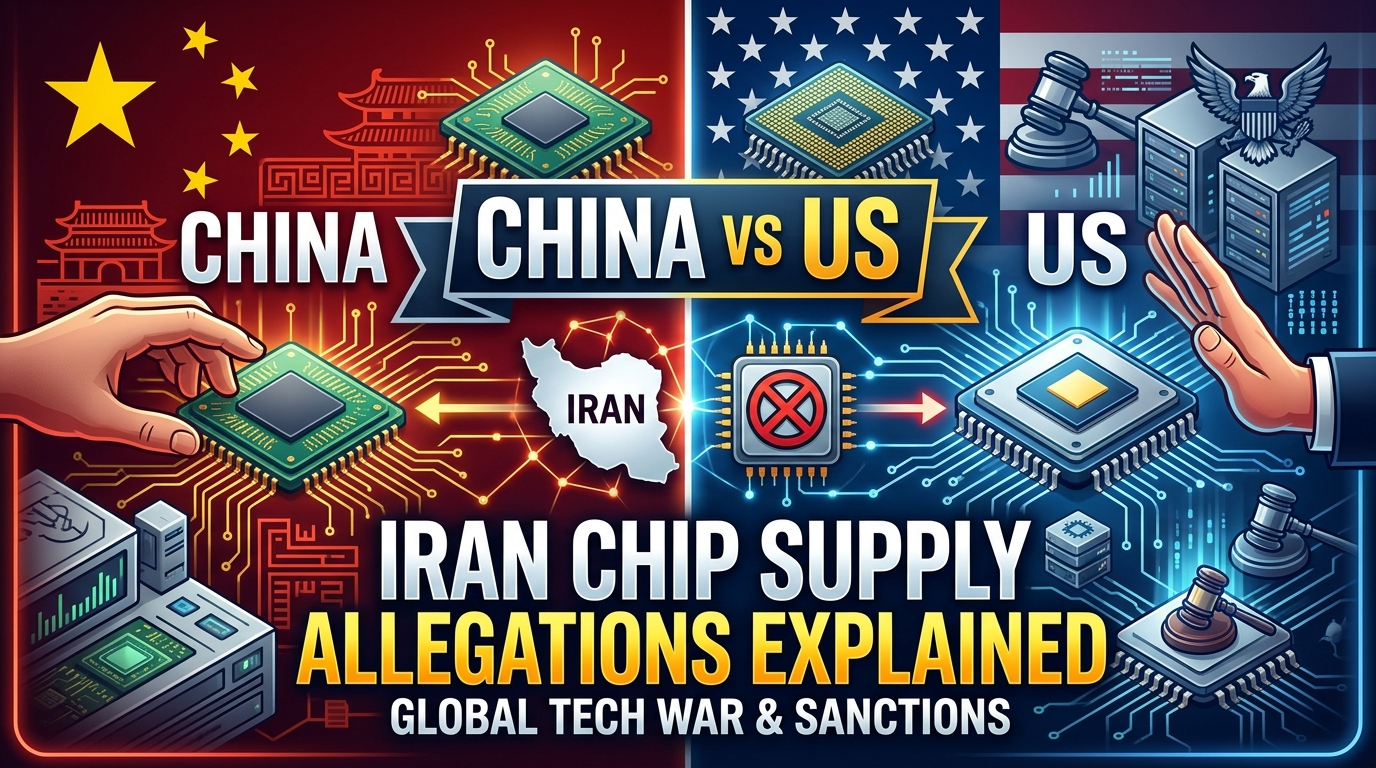
Global trade tensions are reaching a boiling point as new reports surface regarding high-tech hardware transfers. Recent investigations focus on whether Beijing-based firms provided advanced components that could bolster military capabilities in the Middle East.
This situation highlights the growing friction between major superpowers over restricted technology. Observers are closely watching how these developments might impact global markets and regional stability throughout 2026.
The SMIC controversy has become a central piece of this puzzle, raising questions about how sensitive hardware bypasses international oversight. As nations tighten their grip on trade, understanding the flow of these essential parts is more critical than ever for global security.
Key Takeaways
- Allegations suggest that specific hardware may have reached restricted regions despite strict international sanctions.
- The role of major manufacturers remains under intense scrutiny by global trade regulators.
- Geopolitical tensions are escalating as superpowers compete for dominance in the high-tech sector.
- Experts are monitoring how these trade patterns might shift the balance of power by 2026.
- Transparency in the global supply chain is now a top priority for international policy makers.
The Geopolitical Landscape of Semiconductor Trade
The geopolitics of the semiconductor trade is redefining international relations, with far-reaching implications for global stability. As nations navigate the complexities of technological advancement and economic interdependence, the semiconductor industry has emerged as a critical battleground.
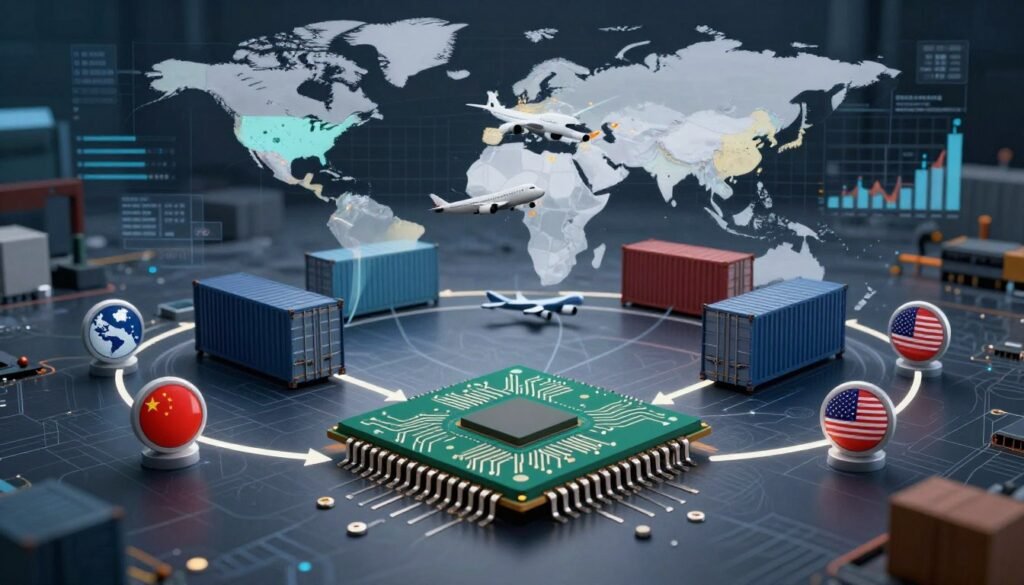
The global semiconductor supply chain is intricate, involving a delicate balance of manufacturing, design, and distribution that spans across multiple countries. This complexity has significant geopolitical implications, as control over semiconductor technology can confer substantial economic and military advantages.
Shifting Alliances in the Global Tech Market
The semiconductor trade is driving a realignment of global alliances, as countries seek to secure their positions within the supply chain. Key players like China, the US, and Taiwan are at the forefront of this shift, leveraging their technological capabilities to forge strategic partnerships and secure vital resources.
- China’s Ascendancy: China has been aggressively expanding its semiconductor industry, investing heavily in domestic production capacity and technology.
- US Leadership: The US remains a dominant force in semiconductor design and manufacturing equipment, using its technological edge to shape global trade policies.
- Taiwan’s Critical Role: Taiwan’s semiconductor manufacturing prowess, particularly through companies like TSMC, makes it a crucial player in the global supply chain.
The Strategic Importance of Semiconductors in Modern Warfare
Semiconductors play a vital role in modern military technology, from advanced radar systems to sophisticated missile guidance. The ability to design and manufacture cutting-edge semiconductors is thus a critical component of national security.
The implications of this are twofold:
- Countries with advanced semiconductor capabilities can enhance their military prowess, potentially altering regional power dynamics.
- The trade in semiconductors becomes a sensitive issue, with export controls and sanctions being used as tools of geopolitical leverage.
As tensions between major powers continue to escalate, the semiconductor trade is likely to remain a contentious issue, influencing the trajectory of global politics and conflict.
Did China supply chips to Iran and the evidence behind the claims
The controversy surrounding China’s potential supply of chips to Iran has garnered international attention. At the heart of this issue is the complex web of global semiconductor trade and the geopolitical tensions that accompany it.
The semiconductor industry is a critical component of modern technology, and the trade involving China and Iran has raised concerns about semiconductor supply chain security. To understand the allegations, it’s essential to examine the evidence and the mechanisms through which such trade could occur.
Investigating Alleged Trade Routes and Smuggling Networks
Investigations into the alleged supply of chips from China to Iran involve tracing complex trade routes and potential smuggling networks. These networks often exploit loopholes in chinese tech export regulations and international trade laws.
- Identifying shell companies and front businesses used to mask the true origin and destination of semiconductor shipments.
- Analyzing financial transactions to uncover patterns indicative of illicit trade.
- Examining reports from customs and border control agencies for seizures or detentions related to semiconductor exports.
Official Responses from Beijing and Tehran
Both China and Iran have officially denied allegations of illicit semiconductor trade. Understanding their responses is crucial to assessing the validity of the claims.
Analyzing Diplomatic Denials
Diplomatic denials from both countries have been swift and firm. China has emphasized its commitment to semiconductor supply chain security and adherence to international trade regulations. Iran, on the other hand, has downplayed the significance of any potential semiconductor imports from China.
The Role of Third-Party Intermediaries
The involvement of third-party intermediaries complicates the investigation into alleged chip supplies from China to Iran. These intermediaries can obscure the origin of semiconductors, making it difficult to track iran semiconductor imports and china semiconductor exports.
Key factors to consider include:
- The use of free trade zones and special economic zones to facilitate trade.
- The role of multinational corporations with operations in both China and Iran.
- The potential for mislabeling or misclassifying semiconductor products to evade export controls.
The SMIC controversy and its role in global sanctions
Amidst rising tensions between the US and China, SMIC has emerged as a key player in the semiconductor trade sanctions debate. The company’s position in the global semiconductor supply chain has raised concerns among US regulators, particularly regarding its alleged ties to Iran.
Understanding the Semiconductor Manufacturing International Corporation Position
SMIC is China’s largest chipmaker and a significant player in the global semiconductor industry. Its manufacturing capabilities and technology have made it an attractive partner for various companies worldwide. However, its proximity to the Chinese government and alleged involvement in supplying chips to sanctioned entities have raised red flags.
The company’s role in the global semiconductor supply chain is multifaceted. SMIC provides foundry services to various fabless chip companies, and its technology has been advancing rapidly in recent years. This advancement has sparked concerns among US regulators about the potential for SMIC to supply advanced chips to entities that could use them for military or other sensitive purposes.
How SMIC Technology Became a Focal Point for US Regulators
US regulators have been closely monitoring SMIC’s technological advancements and its potential implications for national security. The company’s ability to manufacture advanced chips has raised concerns about the potential for these chips to be used in military applications or to be supplied to sanctioned entities like Iran.
The US has imposed various export controls on SMIC, aiming to restrict its access to advanced technology and equipment. These controls have significant implications for SMIC’s operations and its ability to compete in the global semiconductor market.
The Impact of Export Controls on SMIC Operations
The export controls imposed by the US have had a substantial impact on SMIC’s operations. The company has faced challenges in sourcing equipment and technology from US companies, which has affected its ability to upgrade its manufacturing capabilities.
Some of the key effects of these export controls include:
- Restricted access to advanced technology: SMIC has faced difficulties in acquiring cutting-edge equipment and technology from US companies, hindering its ability to improve its manufacturing processes.
- Increased costs: The export controls have led to increased costs for SMIC, as it has had to seek alternative, often more expensive, sources for the equipment and technology it needs.
- Impact on competitiveness: The restrictions have affected SMIC’s competitiveness in the global semiconductor market, as it has struggled to keep pace with technological advancements.
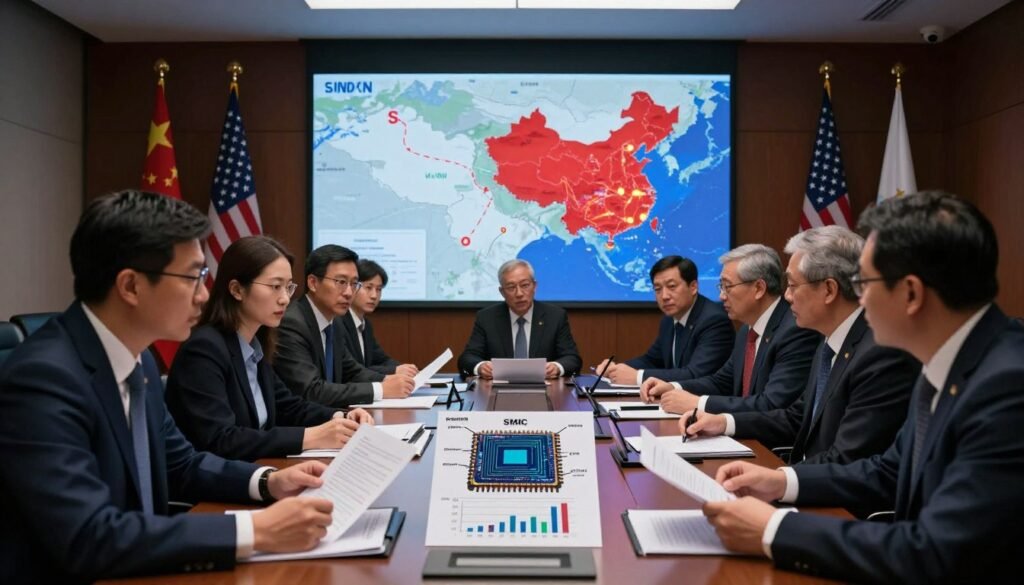
The SMIC controversy highlights the complex interplay between technology, trade, and geopolitics in the semiconductor industry. As the US continues to tighten its export controls, SMIC’s role in the global semiconductor supply chain will remain a focal point for regulators and industry observers alike.
US sanctions on China semiconductors and the impact on Iran
The US government’s crackdown on China’s semiconductor sector has far-reaching implications for Iran’s tech landscape. The US has been tightening its grip on China’s semiconductor industry through a series of export restrictions and sanctions.
This move is part of a broader strategy to limit China’s access to advanced technology, particularly in the semiconductor sector, which is crucial for both commercial and military applications.
The Evolution of US Export Restrictions
The US has been gradually escalating its export restrictions on China’s semiconductor industry. Initially, these restrictions focused on limiting the export of advanced semiconductor manufacturing equipment.
Key developments in US export restrictions include:
- Restrictions on the sale of advanced semiconductor manufacturing equipment to Chinese companies.
- Limitations on the export of specific semiconductor technologies.
- Sanctions on Chinese companies involved in the development or production of advanced semiconductors.
Secondary Sanctions and Their Reach into Global Supply Chains
The US has also employed secondary sanctions to enforce its export restrictions. These sanctions target non-US companies that engage in significant transactions with sanctioned Chinese entities.
The impact of secondary sanctions is far-reaching:
- They deter global companies from engaging with sanctioned Chinese firms.
- They complicate global supply chains, as companies must navigate the risks of non-compliance.
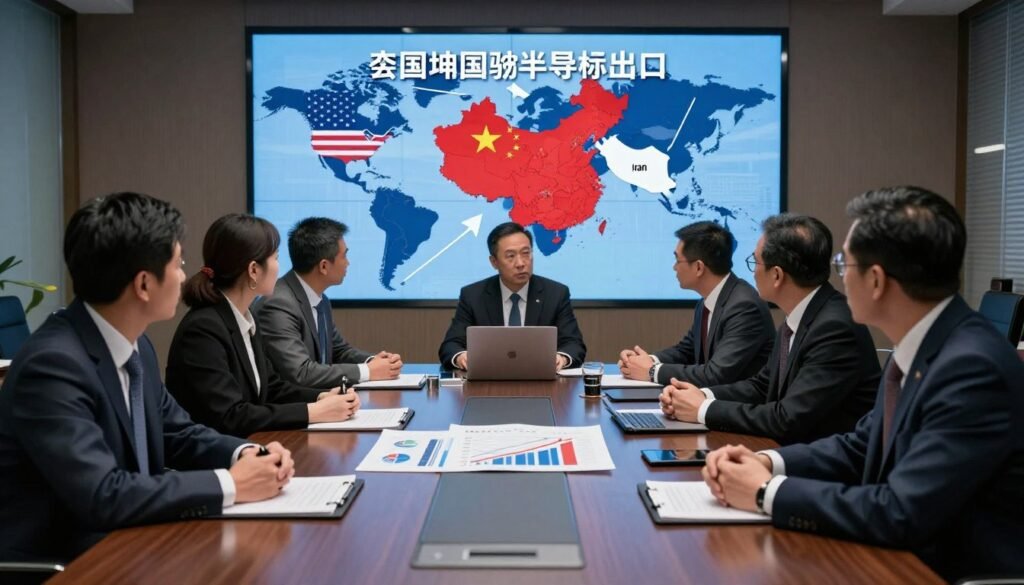
Chinese companies, particularly those in the semiconductor sector, face significant challenges under the weight of US sanctions.
These challenges include:
- Difficulty in accessing advanced technology and equipment.
- Increased costs due to the need to navigate complex and risky supply chains.
- Reputational risks associated with being sanctioned or associated with sanctioned entities.
Analyzing the semiconductor supply chain vulnerabilities
The intricate web of semiconductor trade is susceptible to multiple risks, making it a critical area of focus for stakeholders worldwide. The semiconductor supply chain is not just a matter of manufacturing and distribution; it’s a complex network involving various countries, companies, and technologies.
Identifying Weak Links in Global Chip Distribution
Global chip distribution involves a multitude of players, from manufacturers to distributors, and even end-users. Weak links in this chain can arise from various factors, including geopolitical tensions, regulatory hurdles, and logistical challenges. For instance, the reliance on a few key players in the semiconductor manufacturing process can create bottlenecks. Moreover, geopolitical tensions can disrupt supply chains, as seen in the recent trade tensions between major economies.
The complexity of global chip distribution also makes it challenging to track and regulate the flow of semiconductors. This is particularly true for dual-use technologies, which can be used for both civilian and military applications.
The Difficulty of Tracking Dual-Use Technology
Dual-use technology poses a significant challenge in the semiconductor supply chain. These technologies, by their very nature, blur the lines between civilian and military applications, making regulation and tracking particularly difficult. The export of such technologies is subject to stringent regulations, but enforcing these regulations across a global supply chain is a daunting task.
Furthermore, the rapid evolution of semiconductor technology means that new vulnerabilities and challenges are continually emerging. This necessitates a proactive and adaptive approach to managing the semiconductor supply chain, ensuring that it remains resilient in the face of emerging threats.
Technology transfer to Iran and the role of Chinese firms
As geopolitical tensions escalate, the transfer of technology from China to Iran, especially in the field of semiconductors, has become a critical point of discussion. This transfer is not merely a matter of commercial trade but has significant implications for regional and global security.
Documenting Patterns of Technological Cooperation
The cooperation between China and Iran in the technology sector has been growing steadily over the years. Chinese firms have been at the forefront of this cooperation, providing Iran with the much-needed technological expertise and infrastructure. This includes collaborations in the semiconductor industry, which is crucial for Iran’s military and economic development.
Key areas of cooperation include the development of semiconductor manufacturing capabilities, transfer of semiconductor design technologies, and collaboration in the production of critical components. These areas are vital for Iran’s ambitions to enhance its technological and military capabilities.
The Intersection of Commercial Trade and Military Advancement
The transfer of semiconductor technology from China to Iran has a dual-use nature, benefiting both civilian and military applications. On the civilian side, it enhances Iran’s ability to develop its electronics and telecommunications infrastructure. On the military side, it contributes to the advancement of Iran’s military hardware and capabilities, including missile guidance systems and radar technology.
The blurring of lines between commercial and military technology poses significant challenges for regulators and policymakers. It requires a nuanced understanding of the technology transfer mechanisms and their potential end-uses.
Risks of Technology Leakage in the Semiconductor Sector
One of the significant risks associated with the transfer of semiconductor technology to Iran is the potential for technology leakage. This could occur through various means, including unauthorized re-export, diversion, or theft of sensitive technologies. The risk is exacerbated by the complex global supply chains and the involvement of multiple actors.
To mitigate these risks, it is essential to implement robust export controls and monitoring mechanisms. This includes enhancing international cooperation to prevent the misuse of semiconductor technology and ensuring that Chinese firms adhere to stringent guidelines when engaging with Iranian entities.
- Implementing robust export controls
- Enhancing international cooperation
- Ensuring adherence to guidelines by Chinese firms
Semiconductor industry in Iran and future growth projections
Iran’s semiconductor industry is on the cusp of a significant transformation. As the country navigates the complexities of global sanctions and technological embargoes, its domestic semiconductor sector is emerging as a critical component of its tech strategy.
The industry’s growth is influenced by various factors, including government support, technological advancements, and the availability of skilled workforce. Despite these challenges, Iran has been making notable progress in developing its semiconductor capabilities.
Current State of Domestic Chip Production in Iran
Domestic chip production in Iran is gaining momentum, driven by investments in research and development and the establishment of new manufacturing facilities. Iranian companies are focusing on producing chips for various applications, including consumer electronics and industrial equipment.
Key Statistics:
| Year | Production Capacity (units) | Growth Rate (%) |
|---|---|---|
| 2022 | 1,000,000 | 10 |
| 2023 | 1,200,000 | 20 |
| 2024 | 1,500,000 | 25 |
Barriers to Scaling Semiconductor Manufacturing
Despite the progress, Iranian semiconductor manufacturers face significant barriers to scaling their operations. These include stringent international sanctions, limited access to advanced technology, and a shortage of skilled engineers.
Sanctions and export restrictions have hindered Iran’s ability to acquire cutting-edge semiconductor manufacturing equipment and technology. This has forced local companies to rely on outdated technology, impacting the quality and competitiveness of their products.
The 2026 Outlook for Iranian Tech Imports
Looking ahead to 2026, Iran’s tech imports are expected to be influenced by the country’s efforts to enhance its domestic semiconductor production capabilities. While sanctions are likely to continue impacting the industry, there are opportunities for growth through strategic partnerships and investments in research and development.
The Iranian government is expected to continue supporting the semiconductor industry through initiatives aimed at promoting technological innovation and reducing dependence on foreign technology.
As the global semiconductor market continues to evolve, Iran’s industry is poised to play a more significant role in the regional tech landscape. With the right investments and policies, Iran could potentially become a key player in the semiconductor sector.
Cybersecurity risks and national security implications
The intricate web of global semiconductor trade has significant implications for cybersecurity and national security, affecting regional stability. As nations navigate the complex landscape of technological advancements and geopolitical tensions, the risks associated with the semiconductor trade have become increasingly pronounced.
The semiconductor industry is a critical component of modern technology, powering everything from consumer electronics to advanced military systems. However, the global supply chain for semiconductors is complex and often opaque, creating vulnerabilities that can be exploited by malicious actors.
The Threat of Embedded Backdoors in Imported Hardware
One of the most significant cybersecurity risks associated with the semiconductor trade is the potential for embedded backdoors in imported hardware. These backdoors can provide unauthorized access to sensitive systems, compromising national security and allowing for the theft of sensitive information.
Embedded backdoors can be particularly problematic because they are often difficult to detect and can be used to gain access to even the most secure systems. The risk is further compounded by the fact that many countries rely heavily on imported semiconductors, making it challenging to ensure the integrity of the supply chain.
How Semiconductor Trade Affects Regional Stability
The semiconductor trade also has significant implications for regional stability. The competition for semiconductor technology and manufacturing capacity can exacerbate existing tensions between nations, potentially leading to increased geopolitical instability.
Furthermore, the reliance on imported semiconductors can create dependencies that can be used as leverage in geopolitical disputes. This can lead to a situation where countries are forced to navigate a complex web of competing interests and alliances, further complicating the global security landscape.
Regional stability is critical in the context of the semiconductor trade because it directly affects the ability of nations to cooperate on cybersecurity issues and address common threats. By understanding the implications of the semiconductor trade on regional stability, nations can work towards developing more effective strategies for mitigating cybersecurity risks and protecting national security.
Conclusion
The allegations surrounding China’s chip supply to Iran have brought the complex geopolitics of the semiconductor industry to the forefront. The SMIC controversy has highlighted the intricate relationships between China’s semiconductor manufacturing capabilities and Iran’s chip supply chain.
The china-iran semiconductor trade relations have significant implications for global geopolitics, particularly in the context of US sanctions and export restrictions. The smic iran trade relations have become a focal point for regulators, underscoring the need for greater transparency in the semiconductor industry.
As the semiconductor industry continues to evolve, updates on the iran chip supply chain and china semiconductor export to iran will be crucial in understanding the shifting landscape. The global community remains vigilant, recognizing the potential impact of these trade relations on regional stability and national security.
The intricate dynamics of the semiconductor trade between China and Iran serve as a reminder of the industry’s critical role in modern geopolitics.