
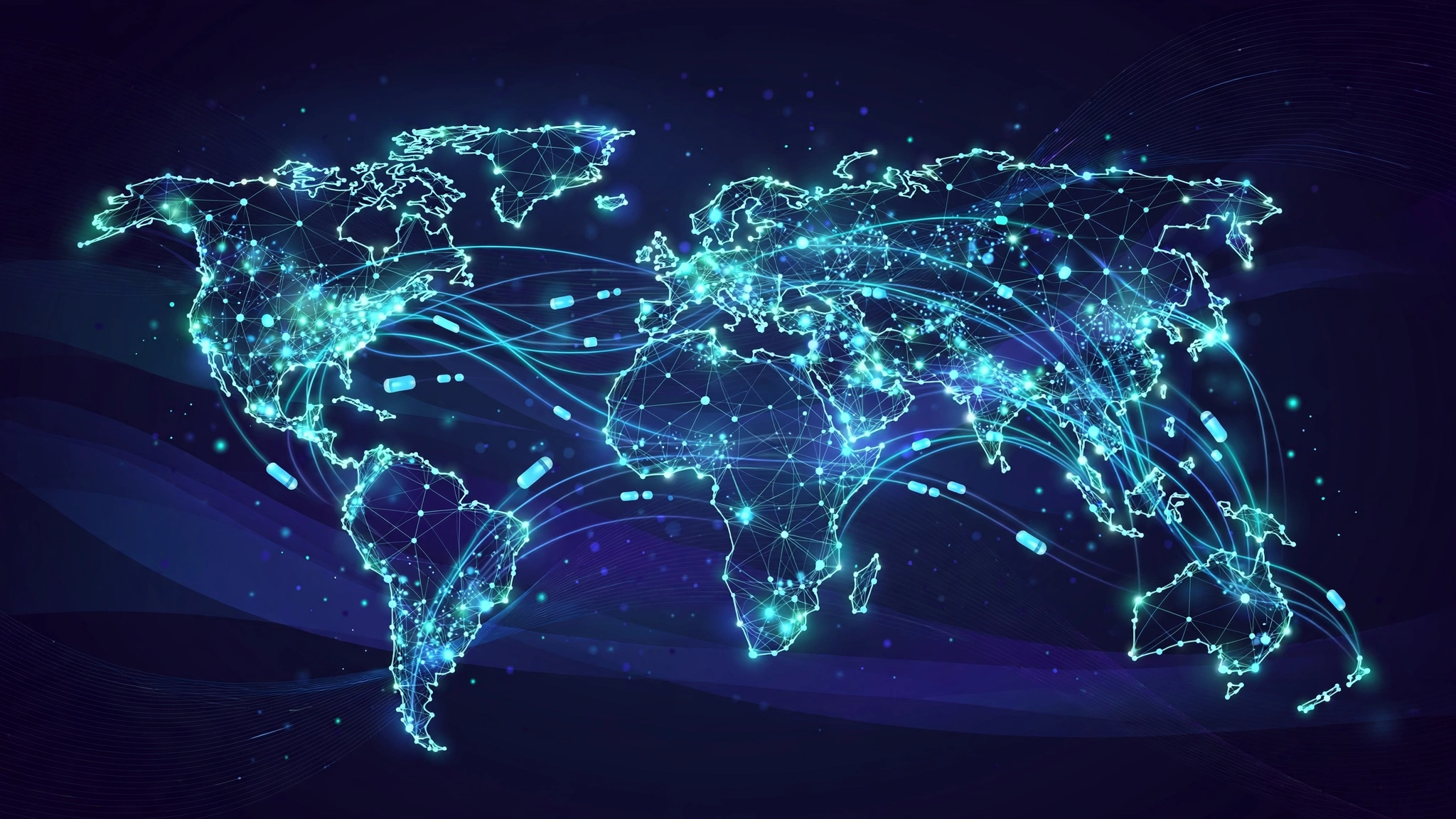
You use the internet every single day — to watch videos, message friends, and read articles like this one. But have you ever stopped to wonder how a photo taken in Tokyo can appear on your phone in Karachi within a single second? The answer is one of humanity’s greatest engineering achievements, and it is far simpler to understand than you might think.
The Internet Is a Network of Networks
Let’s start with the most important idea: the internet is not one giant computer sitting somewhere. It is a network of networks — millions of smaller networks (your home Wi-Fi, your mobile carrier, your office, a university, a giant data center) all connected together and agreeing to exchange information.
It began in the late 1960s as ARPANET, a small research project connecting just a few universities. The breakthrough was a shared language called TCP/IP — a set of rules that let any computer talk to any other computer, no matter who built it. Because no single company owned these rules, the network grew explosively. Today, well over five billion people use it.
Think of it like the global postal system: no one owns “the mail,” but every country’s postal service agrees on how envelopes are addressed and delivered. The internet works on the same principle of cooperation.
Everything Travels in Tiny Packets
When you send a photo to a friend, your phone doesn’t ship the whole photo across the world in one piece. Instead, it chops the photo into thousands of tiny chunks called packets. Each packet is like a postcard stamped with two addresses: where it came from and where it’s going.
Here is the clever part: packets don’t all have to take the same road. Like cars choosing different routes to avoid traffic, packets travel independently across the network and get reassembled in the correct order when they arrive. If one packet gets lost, only that piece is re-sent — not the whole photo. This is why a video call can glitch for a split second and then recover: a few packets went missing, and your device simply asked for them again.
Addresses: How Computers Find Each Other
Every device connected to the internet has an address called an IP address — think of it as a phone number for computers. A typical one looks like 142.250.190.14. When your phone wants to talk to a server, it addresses its packets to the server’s IP address, and the network figures out the route.
The original system (IPv4) had about 4.3 billion possible addresses — which sounded like plenty in the 1980s but ran out as phones, TVs, and watches came online. The newer system (IPv6) has so many addresses that every grain of sand on Earth could have its own. Most of the internet still runs on IPv4, but IPv6 is quietly taking over behind the scenes.
DNS: The Internet’s Phonebook
Nobody wants to memorize 142.250.190.14, so we use names like google.com instead. The Domain Name System (DNS) is the giant phonebook that translates names into IP addresses. When you type a web address, your device asks a DNS server, “What’s the IP address for this name?” — and usually gets an answer in milliseconds.
This lookup happens every time you visit a new site, which is why your provider’s DNS speed can slightly affect how fast pages start loading. It is also why a mistyped address can land you somewhere unexpected — DNS simply looks up whatever name you give it.
The Hidden Highways: Cables Under the Ocean
Here is a fact that surprises most people: about 99% of intercontinental internet traffic travels through physical cables lying on the ocean floor, not satellites. These fiber-optic cables — thinner than a garden hose but armored against the deep sea — carry data as pulses of light at nearly the speed of light itself.
Satellites handle only a tiny fraction of traffic because sending a signal tens of thousands of kilometers up to space and back creates noticeable delay. That’s why satellite internet can feel laggy on video calls, even though it’s a lifesaver for remote areas with no cables. The next time a video loads instantly, thank a cable ship that laid fiber across an ocean trench.
The internet doesn’t live in “the cloud.” It lives in cables, buildings, and machines all over the planet — the cloud is just a friendly name for someone else’s computer.
What Happens When You Open a Website
Let’s put it all together. When you type a web address and press Enter, roughly this happens in under a second:
- DNS lookup: Your device asks, “What’s the IP address of this site?”
- Connection: Your browser opens a connection to that address, like dialing a phone number.
- Request: Your browser sends a request: “Please send me the homepage.”
- Response: The web server chops the page into packets and fires them back across the network.
- Assembly: Your browser reassembles the packets and paints the page on your screen — text, images, and all.
Every click, every video frame, and every message follows some version of this dance — billions of times per second, all over the world.
Who Actually Owns the Internet?
No one — and that’s by design. Your internet provider owns the wires to your house. Big tech companies own many of the servers and data centers. But the core rules (TCP/IP, DNS, web standards) are managed by non-profit organizations and open communities, like ICANN (which coordinates domain names) and the IETF (volunteer engineers who write the technical standards).
This shared ownership is the internet’s superpower: no single government or company can simply switch the whole thing off. Parts of it can be blocked or damaged — undersea cables get cut by ship anchors more often than you’d think — but the network routes around problems automatically. It was designed that way from the start.
Wi-Fi Is Not the Internet
One common confusion worth clearing up: Wi-Fi and the internet are not the same thing. Wi-Fi is just the wireless link between your device and your router — the last few meters. The internet is the vast global network beyond your router. That’s why your phone can show “connected to Wi-Fi” with full signal bars yet load nothing: the Wi-Fi link is fine, but the router’s connection to the internet is down.
Frequently Asked Questions
Is the internet the same as the World Wide Web?
No. The internet is the underlying network — the roads. The World Wide Web is one service that runs on it — the cars. Email, video calls, online gaming, and messaging apps all use the internet too, but they aren’t “the web.” The web (websites and browsers) was invented around 1990, decades after the internet itself.
Can the entire internet shut down at once?
Extremely unlikely. Because it is decentralized, there is no single switch. Large parts can go dark — countries have experienced outages, and cable cuts have slowed whole regions — but the network is designed to route around damage. Your corner of it can fail; all of it failing at once would require a catastrophe on a planetary scale.
Why is my internet slow sometimes?
Usually one of four culprits: network congestion (too many people online at once, like rush-hour traffic), distance (data from faraway servers takes longer), a weak Wi-Fi signal in your home, or your internet plan’s speed limit. Restarting your router genuinely helps sometimes — it clears temporary glitches and reconnects you cleanly.
Do I need to understand all this to use the internet?
Not at all — just as you don’t need to understand engines to drive a car. But knowing the basics helps you troubleshoot problems and spot scams (like fake “your connection is insecure” popups), and it gives you an appreciation for the invisible infrastructure carrying your daily life.
The internet feels like magic because its complexity is hidden behind a simple screen. But underneath, it is something beautifully understandable: small packets, smart addresses, shared rules, and cables crossing oceans — all working together so a message can circle the planet in the blink of an eye. The next time a page loads instantly, you’ll know exactly what just happened.


1 thought on “How the Internet Actually Works: A Simple Explanation Anyone Can Understand”